Real Grass vs. Artificial Turf: The Honest 10-Year Cost
Side-by-side cost comparison over 10 years — install, water, mowing, fertilizer, your time. The break-even is faster than most people expect, especially in the Pacific Northwest.
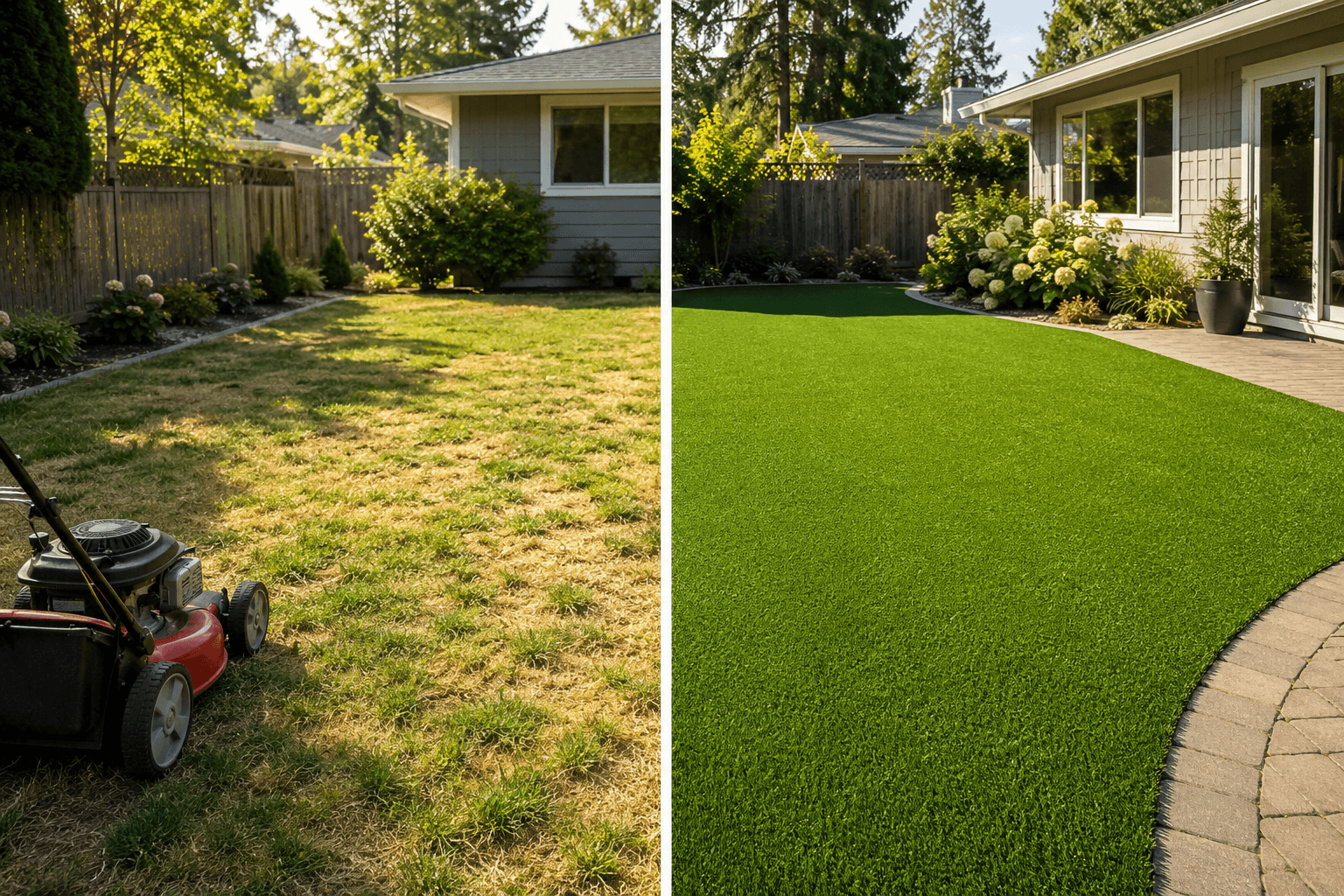
Most people compare artificial turf to real grass by looking at the install bill, deciding it's expensive, and moving on. That comparison is wrong. Real grass has a recurring cost that nobody adds up. Here's the actual 10-year math for a typical 800 sqft Salem-Portland backyard.
Year 1: install vs. nothing
| Real grass — seed or sod existing yard | $0–$2,400 |
| Artificial turf — installed | $11,000–$15,500 |
Turf wins zero arguments at year 1. That's the easy part. The comparison flips around year 4.
Annual ownership cost (real grass)
| Water (800 sqft @ Salem water rates) | $280–$420 |
| Fertilizer + weed control (4 apps/yr) | $140–$240 |
| Mowing — DIY (gas, oil, blades, depreciation) | $110 |
| Mowing — service ($45 × 28 weeks) | $1,260 |
| Aeration + overseeding (every 2 yrs) | $100–$200 |
| Annual time (DIY) | 30–50 hours |
Annual cash cost: $640–$940/yr DIY, or $1,800–$2,100/yr with a lawn service. Plus 30–50 hours of your Saturday mornings.
Annual ownership cost (artificial turf)
| Water (rinse-off only, 2-3 times/yr) | $8 |
| Yearly brushing (DIY, 1 hr) | $0 |
| Infill top-up (every 5-7 yrs, prorated) | $15 |
| Annual time | ~2 hours |
Annual cash cost: ~$25/yr. Two hours of your time.
The 10-year total
The break-even calculation
If you currently pay a lawn service, turf breaks even at about year 6–7. Every year after is pure savings.
If you DIY the lawn, the cash break-even is around year 14–16— but you have to value your time at $0 to say turf isn't worth it. At $20/hour for those 40 hours/year, you'd save $800/year in time. Now turf breaks even at year 8.
Costs nobody else mentions
Real grass hidden costs
- Mower repair — average $150/yr after year 3
- Drought-stressed re-seeding — $200-400 every 2-3 dry summers
- Pest control — moles, grubs, anthills
- Pet damage repair — yellow patches, dig spots, brown trails
- Lower curb appeal in August — when real lawns go dormant and brown
Artificial turf hidden costs
- Infill top-up every 5–7 years — usually $200–$400
- Stain remediation if you spill paint or pour bleach on it
- Eventual re-roll after 15–25 years
What about the environment?
Honest answer: it's complicated.
- Water: Artificial turf saves 5,000–15,000 gallons/year per 800 sqft. In drought-prone PNW summers, that's meaningful.
- Pesticides + herbicides: Zero on turf. Real lawns use a lot.
- Mower emissions: A gas mower run for 1 hour emits as much as driving a car ~100 miles. Times 28 mowings/year.
- Material: Turf is plastic. It'll need replacement and disposal in 20 years.
- Heat: Turf surface temp runs higher than grass on hot days. Less of an issue in Salem than in Phoenix.
The non-financial reason most people switch
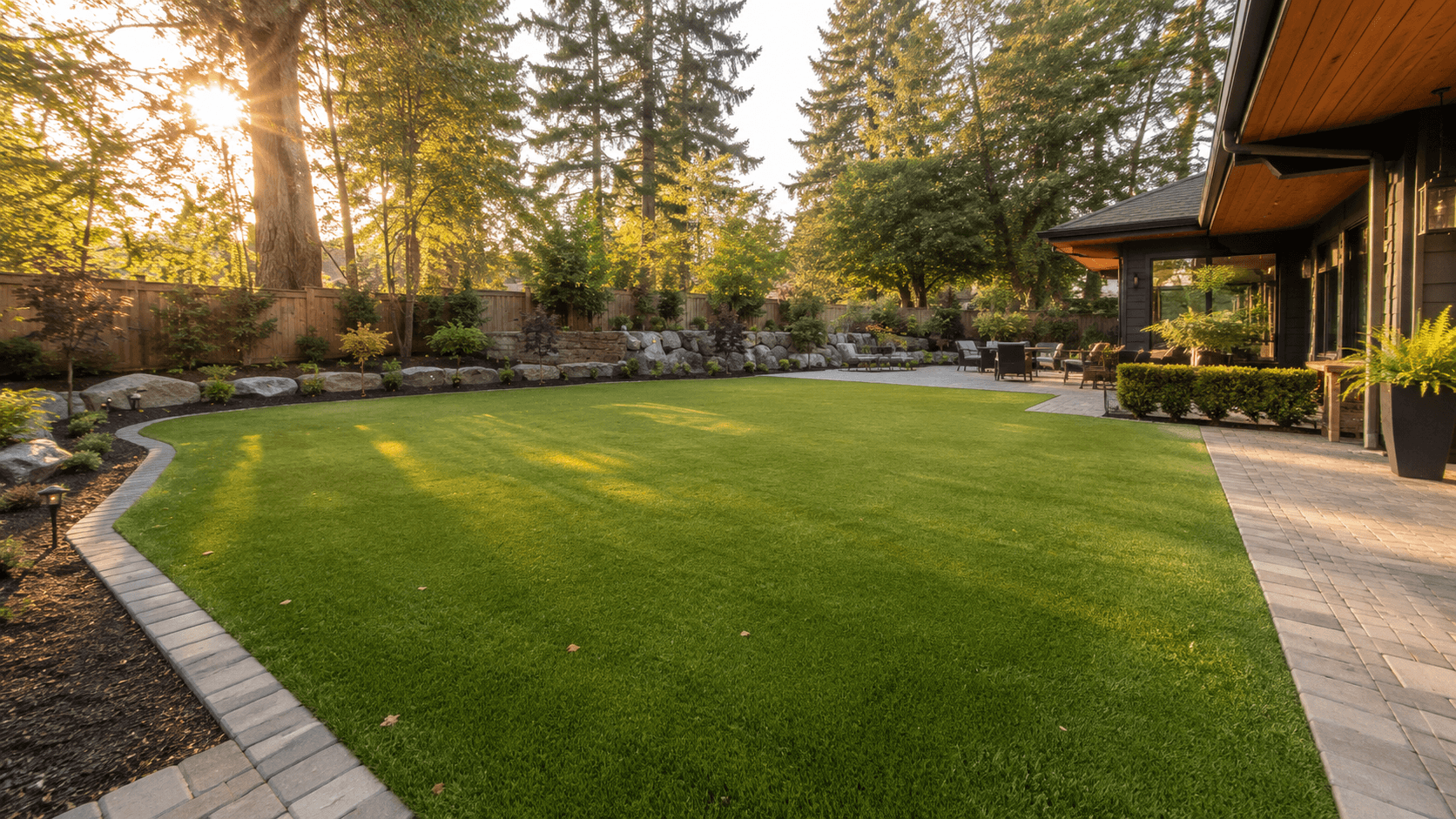
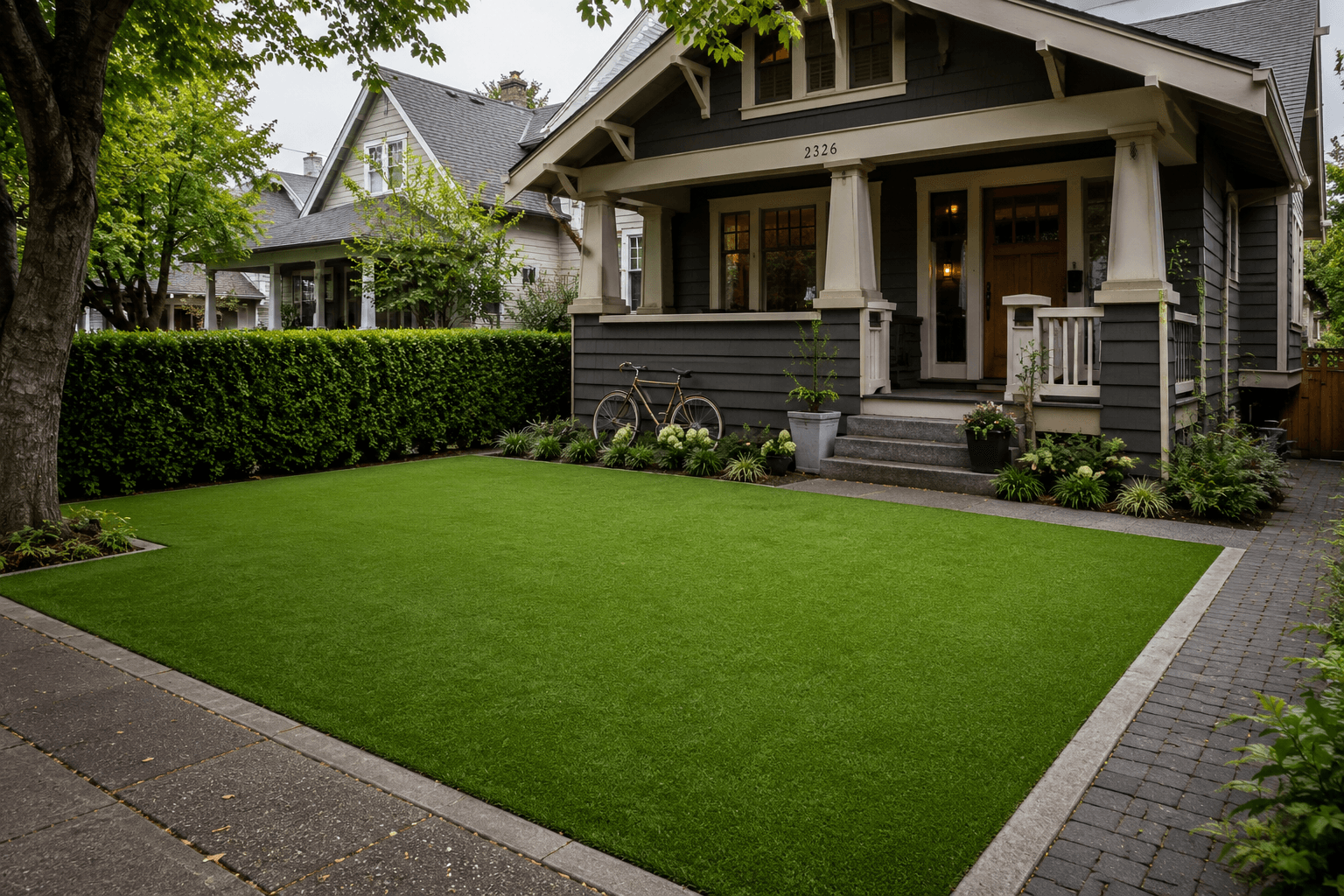
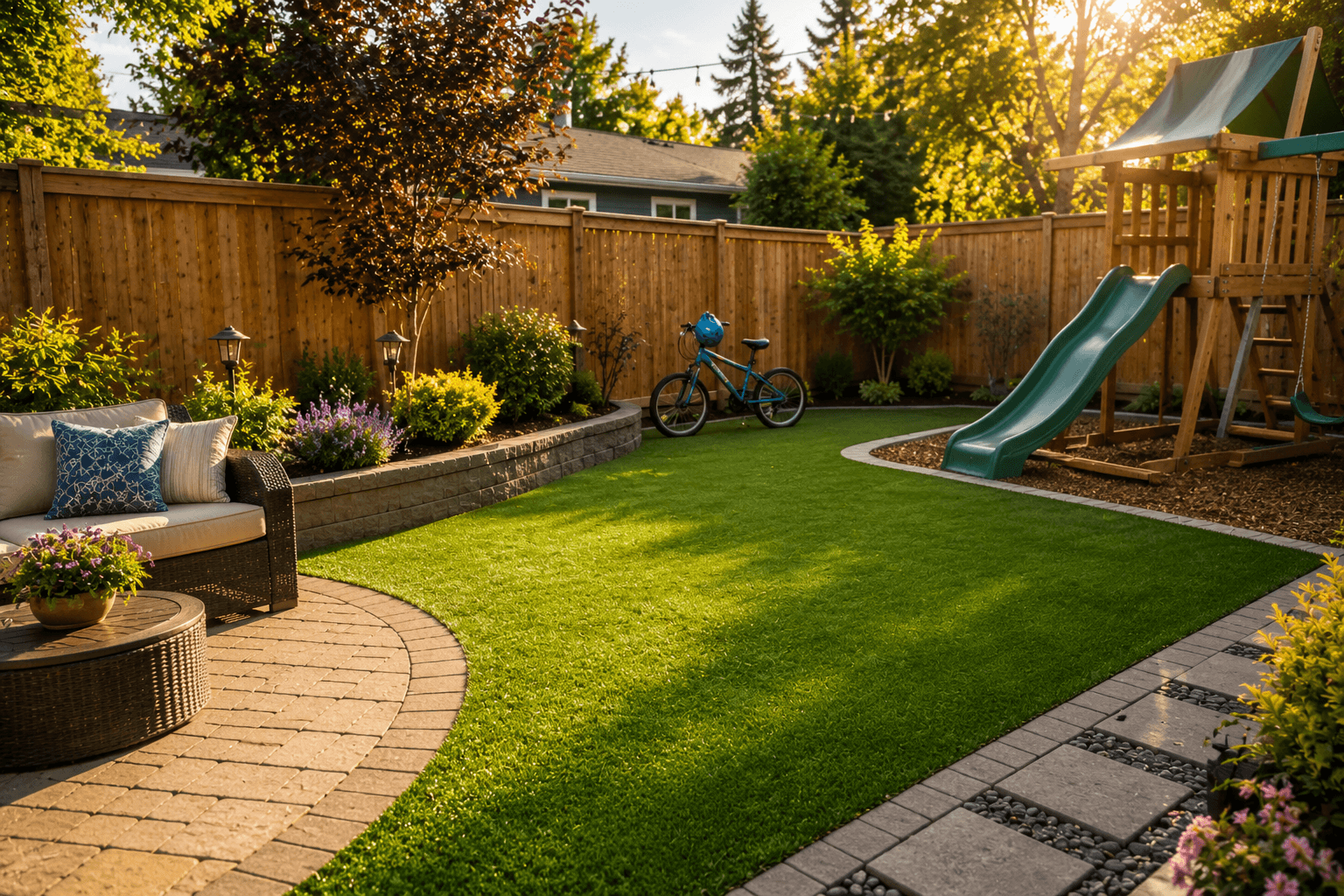
We've installed turf for hundreds of yards across the Salem-Portland corridor. The thing nobody mentions in the spreadsheet: your yard looks great year-round. Not yellow in August. Not muddy in February. Not patchy where the dog runs. Not the source of a Sunday-morning argument about whose turn it is to mow.
That's the value you can't put a dollar on, and it's the actual reason most of our customers pull the trigger.
Want to see what it'd look like in your yard?
Upload a photo, see your yard rendered with the install, get a ballpark price. Or chat with Turfy 🌱 down in the corner about anything specific.